Graduation trips

Graduation trips

Project description:

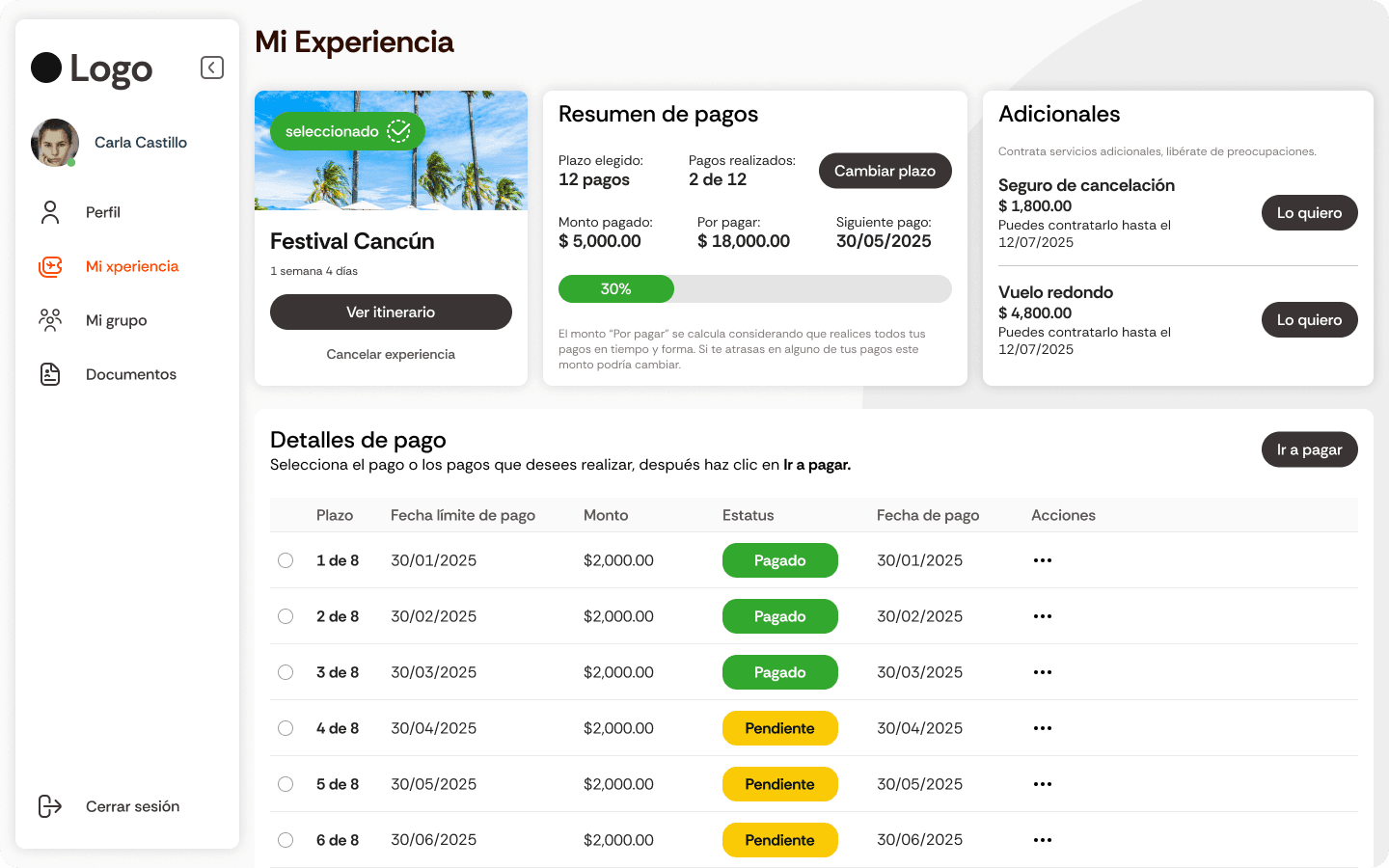
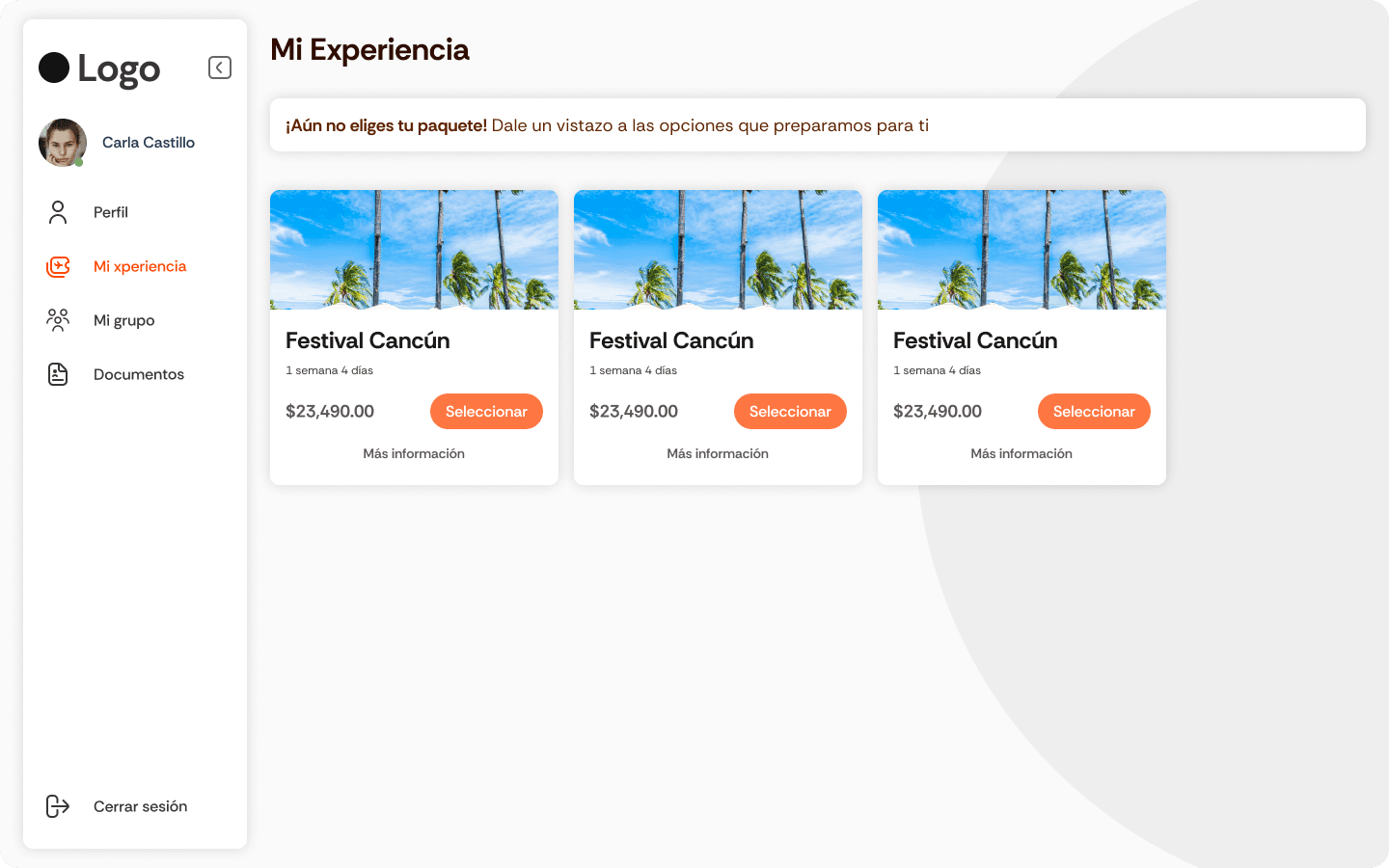
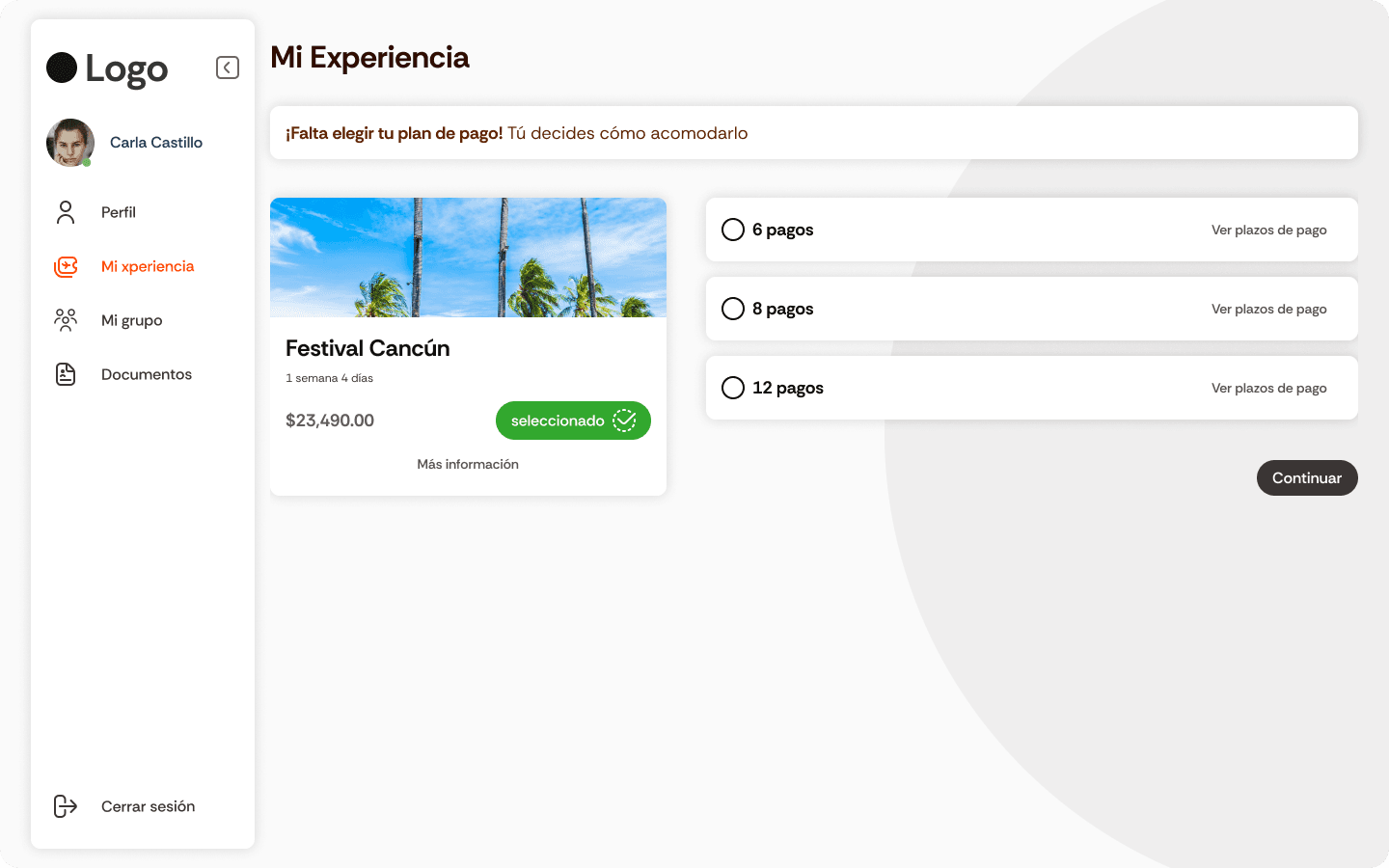
Redesign of a travel company's platform for recent graduates, which required an improved experience for both end users and platform administrators. The previous platform lacked intuitive navigation, leading to frustration when performing key tasks such as user registration and trip management.

Context and problem to be solved:

The platform had complex and unclear navigation. Users had difficulty registering new trips and tracking their payments, while administrators struggled to create customized packages, impacting the efficiency and satisfaction of both groups.
My role and collaboration:

I participated as a product designer, collaborating closely with developers, stakeholders, and the product team.

Process:

Interviews with users to identify pain points

Before redesigning the platform, structured interviews were conducted with end users and some administrators.

Why was this decision made?

Because the platform had real usability problems, but there was no prior or very clear evidence about what these pain points were where users were getting stuck or what needs weren't being met.

The interviews allowed us to:

• Obtain information that isn't visible in metrics or analytics

• Understand how users conceptualized a journey, how they organized information, and what caused them friction.

• Identify discrepancies between the business interaction and user expectations

• Reduce the risk of building a product based on assumptions.


This step helped us ensure that all subsequent decisions were based on real insights and not on the team's interpretations.

Design and testing of low and high fidelity prototypes in Figma

Low-fidelity wireframes were created to quickly test the hypothesis, and then high-fidelity wireframes were created to test other hypotheses.

Why was this decision made?

Because low-fidelity design allows you to:

• Explore diverse solutions without investing excessive resources.

• Facilitate internal discussions focused on functionality and flow, not aesthetics.

• Iterate quickly to validate hypotheses before committing time to detailed screens.


Moving to high fidelity allowed us to:

• Evaluate the visual design, hierarchy, and consistency of the product.

• Test more realistic interactions that were closer to the final product.

• Obtain more accurate feedback from users and administrators.


This process helped minimize rework and accelerated the validation process.

Usability testing and A/B testing to validate solutions

Once the prototypes were created, usability testing and A/B testing were carried out with real users.

Why was this decision made?
Because no solution should be implemented without first validating it. The tests allowed us to:

• Measure whether the changes made actually helped reduce cognitive load.

• Observe whether tasks (checking in, managing purchases, creating packages) could be completed with less friction.

• Compare two versions of key components to objectively determine which offered less friction for users.

• Identify small problems that are not detected in interview sessions or internal reviews.


These tests prevented a redesign based on assumptions and ensured that the experience improved from the perspective of end users, not just the business.

Result:

The platform's navigation and usability were significantly improved, reducing cognitive load and simplifying tasks for both users and administrators. The solution allowed tasks to be completed more quickly and confidently, with positive feedback in the final tests.

Create a free website with Framer, the website builder loved by startups, designers and agencies.