Fintech

Fintech

Project description:

Design and conceptualization of a digital platform for a company offering loans, focused on helping users with outstanding debts by offering them a lower-than-average interest rate and without excessive bureaucratic processes.

Context and problem to be solved:

The client did not have a platform to offer their services, which was limiting their ability to reach users who needed this type of financial solution. It was necessary to design an intuitive, accessible, and scalable experience to facilitate the loan application process and help them resolve their debt.
My role and collaboration:

I acted as a product designer, working alongside stakeholders, developers, and the business team to understand objectives and translate them into a user centric experience.

Process:

Sessions with stakeholders to understand business rules and objectives

The project began with detailed sessions with stakeholders to thoroughly understand how the business worked, which processes could be automated, and which required human intervention.

Why was this decision made?
Before designing a financial platform, it was essential to understand the business from the inside out. Design decisions depend directly on operational rules, legal processes, and the company's actual limitations.
These sessions allowed us to:

• Avoid designing flows that were unfeasible or did not comply with legal requirements.

• Identify opportunities to simplify processes and make them less bureaucratic.

• Align the team around a shared vision of what it means to help users settle their debts, going beyond the purely commercial aspects.

• Detect discrepancies between what the client wanted to offer and what could realistically be guaranteed.

• Build a user-centric platform without sacrificing technical or financial viability.


This step reduced risks from the outset and ensured that the design was based on solid information, not assumptions.

User research to understand needs and behaviors

Interviews were conducted with users at different levels of indebtedness, from those seeking to consolidate payments on a single platform to those who had already used a similar financial service. The objective was to understand the emotions, frustrations, and expectations when applying for a loan to pay off debt.

Why was this decision made?
Financial products can generate anxiety, fear of making a mistake, and often create distrust. It was necessary to understand how users interpreted concepts such as "low rate," "loan to settle debt," "easy process," and "sharing sensitive data."

• Detect the factors that increased trust and those that could cause it to be lost (e.g., overly long forms, unclear terms, or ambiguous messages).

• Identify which parts of the process could be confusing, intrusive, or difficult to complete.

• Understand what level of transparency users required to feel secure.

• Determine what information should be shown first and what was better revealed gradually. This phase was important for defining the interface's tone, the process steps, and how to present sensitive information without overwhelming the user.


This phase was crucial in defining the tone of the interface, the steps of the process, and how to present sensitive information without overwhelming the user.

User persona creation

Based on the findings from the interviews, user personas were created that represented the motivations, fears, financial goals, and behavioral patterns of the users.

Why was this decision made?
The user personas served as a tool to guide decisions and keep the team aligned with the real needs of the end users.
They allowed us to:

• Remember that every design decision can impact people who might feel vulnerable when discussing debt-related topics.

• Prioritize functionalities based on the greatest value identified for the user, not just for the business.

• Design clear and empathetic messages appropriate to the financial literacy level of each user profile.

• Avoid falling into patterns that did not reflect the reality or emotional context of the users.

• Maintain objective design discussions, using the user personas as a reference when internal doubts arose. With this, the design remained focused on who would actually use the platform.


With this, the design remained focused on who was actually going to use the platform.

Low-fidelity flow design and prototypes to validate structure and functionality

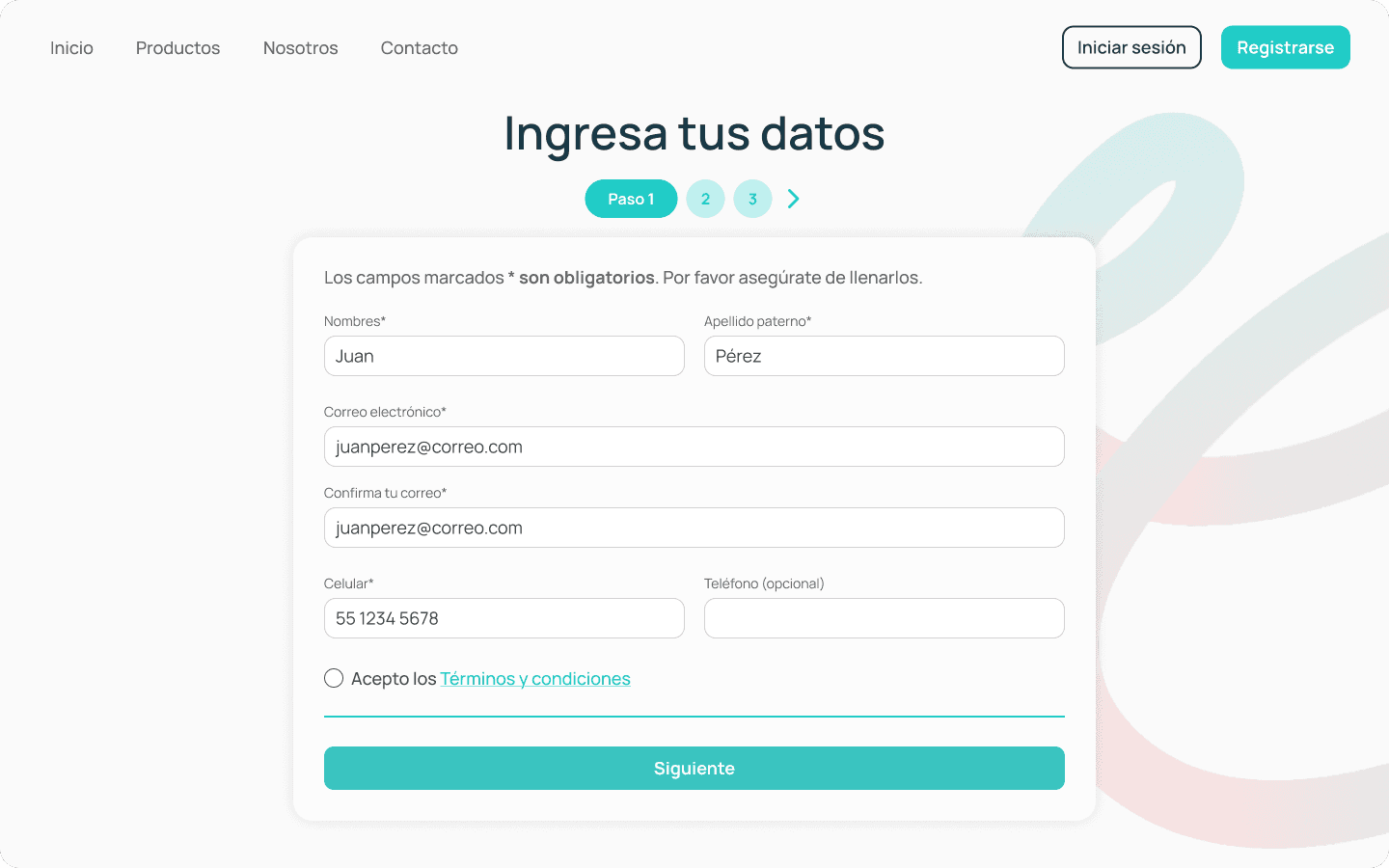
Using the available business and user information, the main flow was structured: loan application, debt analysis, document upload, and terms review. This was then converted into wireframes and a low-fidelity prototype in Figma.

Why was this decision made?
Designing in low fidelity first allows for rapid iteration and avoids wasting time on premature visual details.
It also allowed us to:

• Ensure that the sequence of steps for applying for a loan was logical, clear, and did not lead to abandonment.

• Validate what type of information should be requested at each stage to avoid overwhelming the user.

• Identify critical points where there was a risk of confusion or mistrust.

• Receive early feedback from the team to avoid costly rework.

• Evaluate different flow alternatives without committing weeks of design time.


This approach significantly reduced initial complexity and allowed us to confirm that the product architecture made sense before investing in visual design.

High fidelity prototype design

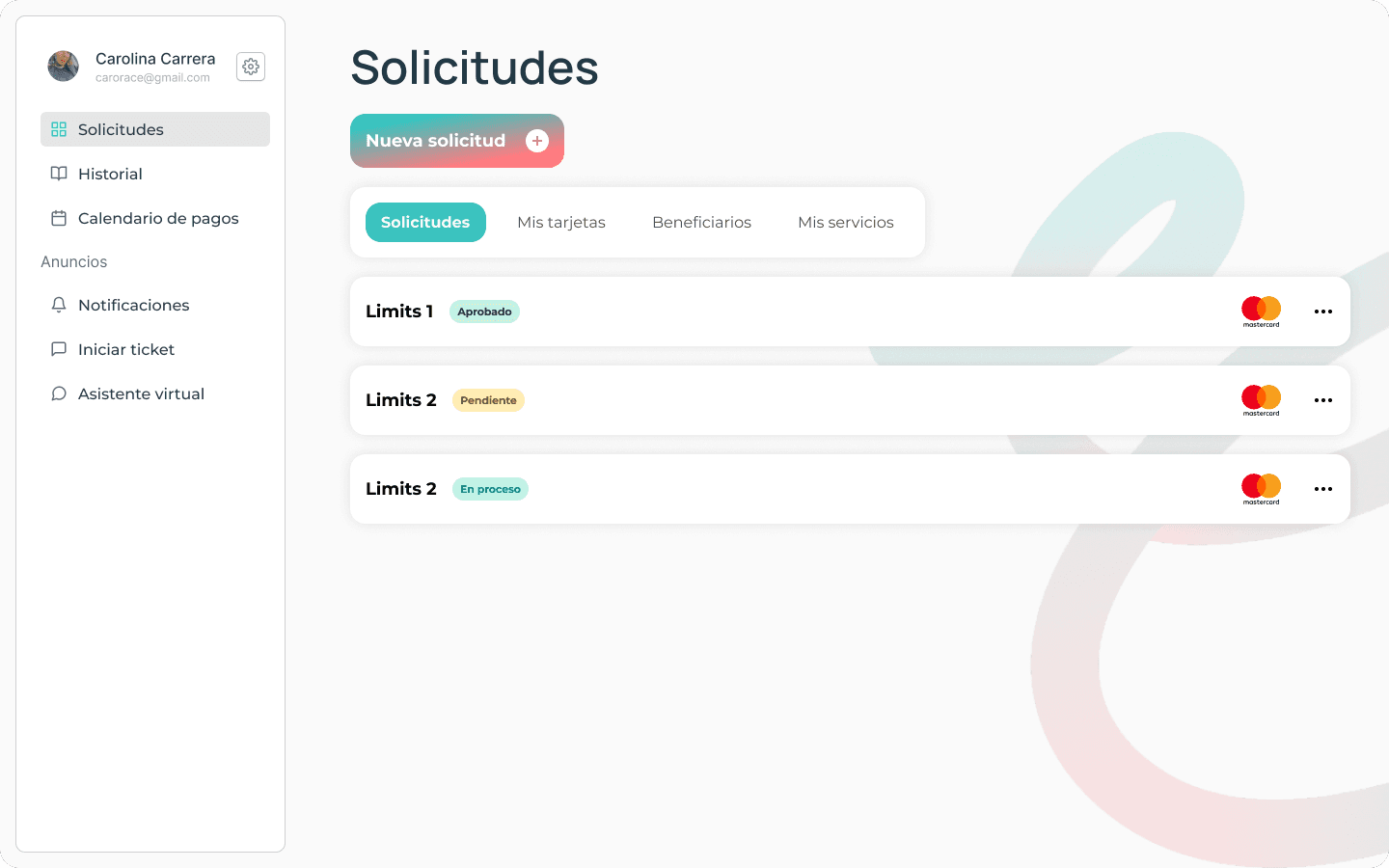
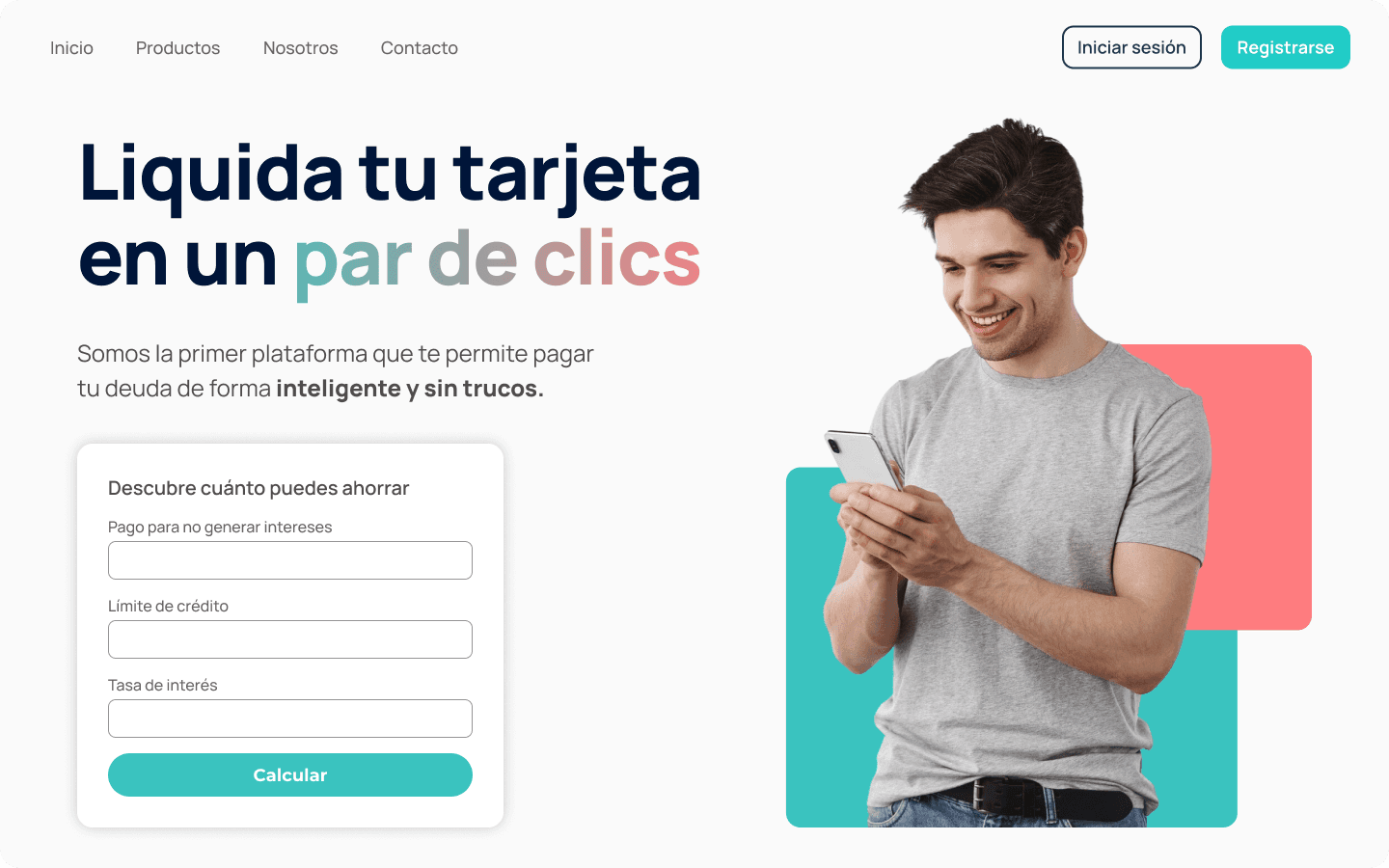
After validating the wireframes, a high-fidelity prototype was developed, carefully considering details such as visual tone, hierarchy, micro-interactions, colors, typography, and informative messaging.

Why was this decision made?
In financial products, visual design directly influences the user's perception of security and credibility. Working in high fidelity allowed us to:

• Convey trust through a clean, stable, and consistent design.

• Create reusable components to facilitate future scalability and consistency of the product.

• Design clear interactions so users always knew what stage they were at.

• Test the interface exactly as it would appear in the final version, allowing for more precise feedback.

• Evaluate readability, information density, and clarity of financial terms.


This ensured that the platform was not only functional but also emotionally secure and visually trustworthy.

Result:

Sen delivered an intuitive and functional platform that simplified loan applications and reduced unnecessary paperwork. Users were able to resolve their financial problems more quickly, while the company built a solid base of satisfied customers, ready to expand its services.

Create a free website with Framer, the website builder loved by startups, designers and agencies.