Project description:
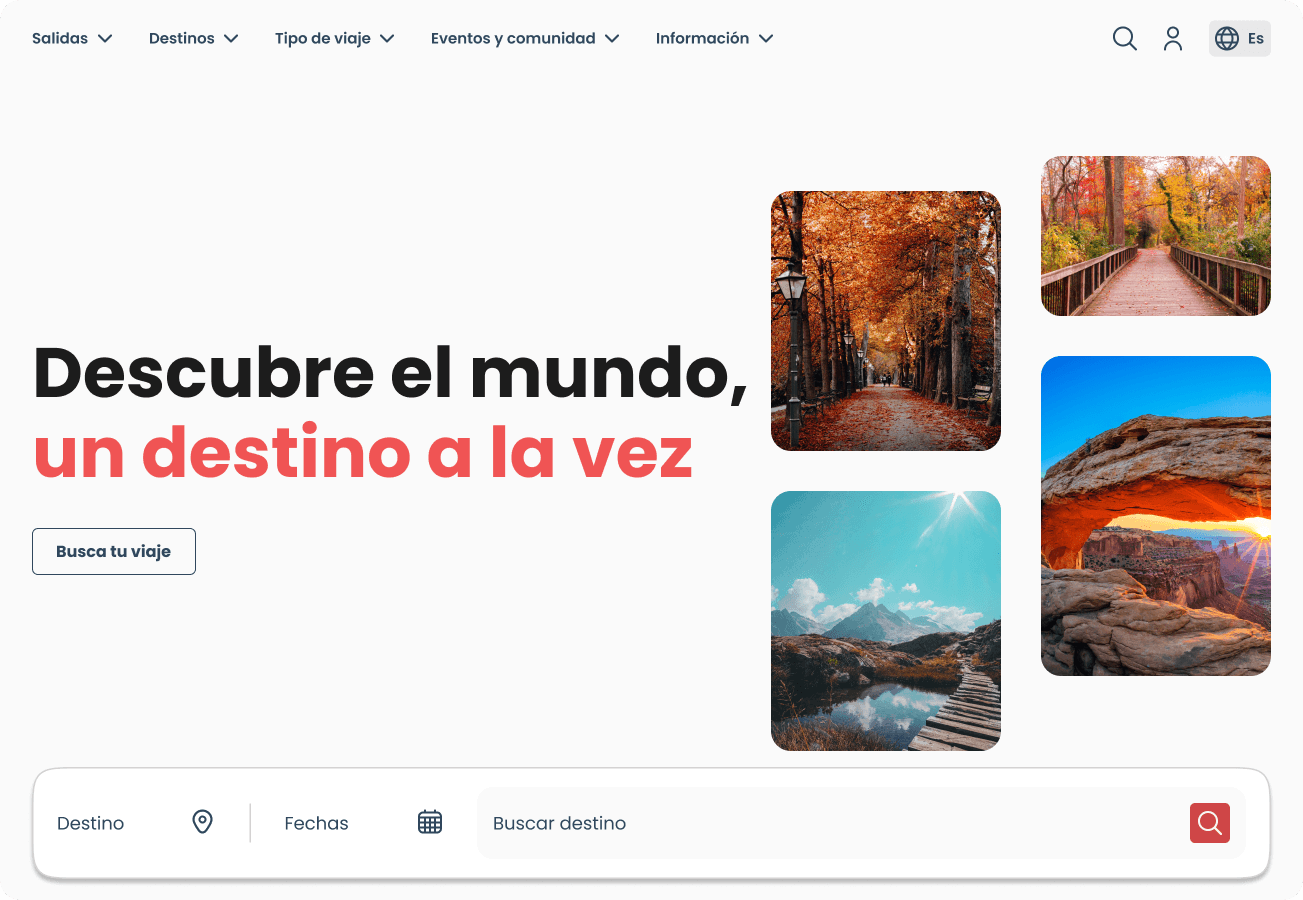
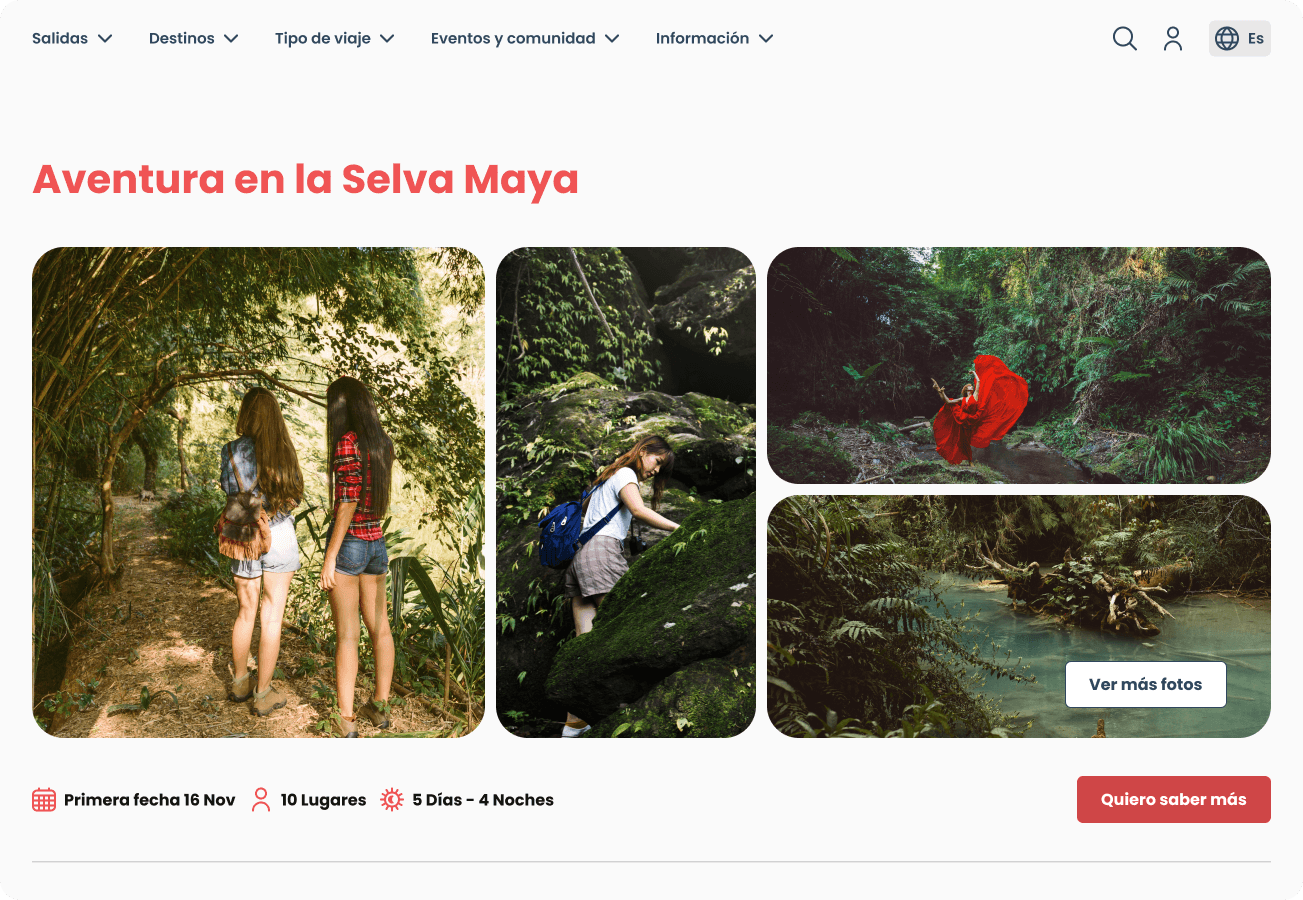
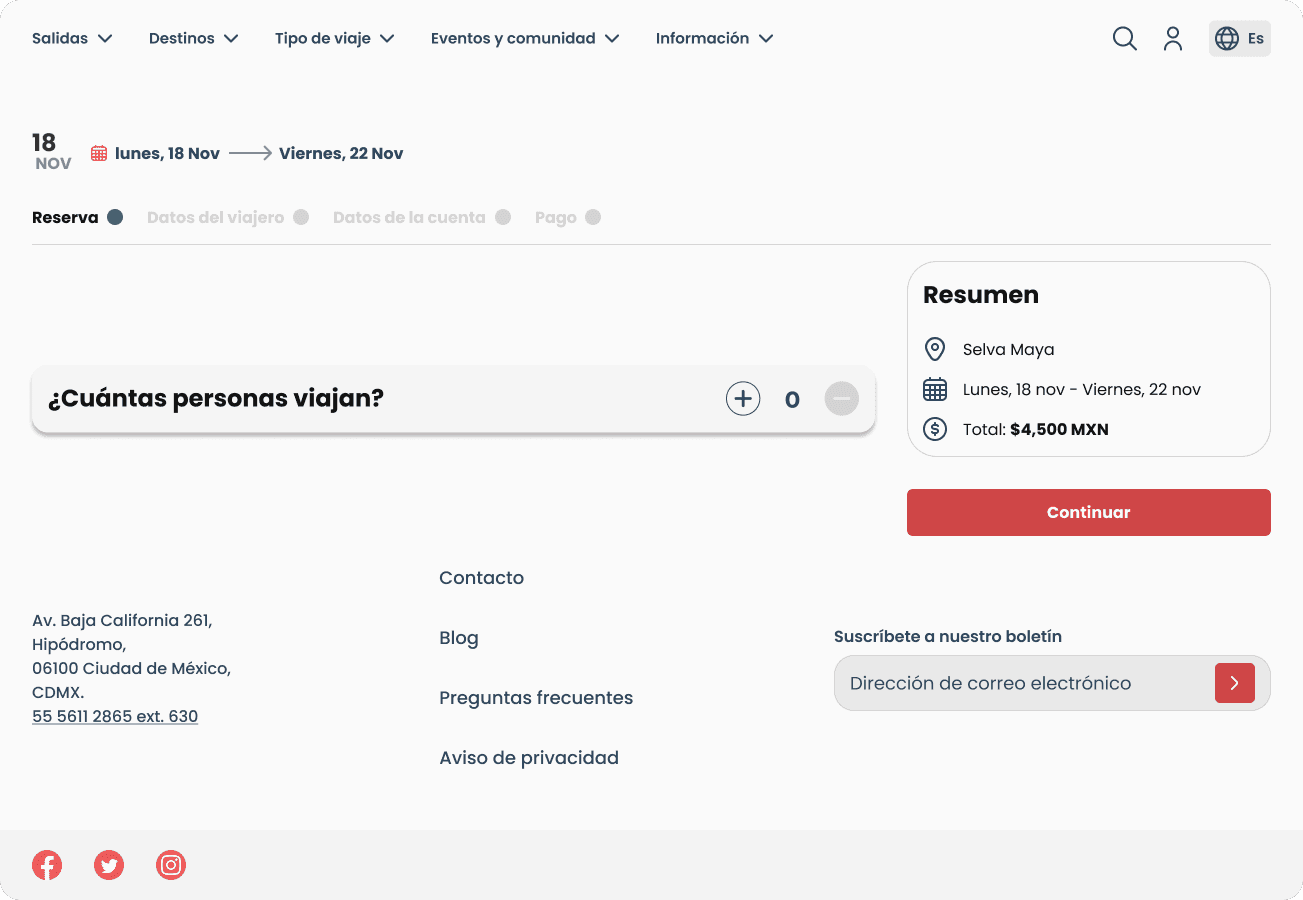
Design and optimization of a platform focused on offering adventure experiences such as climbing, camping, hiking, and other outdoor activities. The goal was to make it easy for users to find challenging activities, with a simple registration process and a clear and secure booking system.
Context and problem to be solved:
The client wanted to differentiate themselves by offering customized adventure packages, but their process was confusing and unreliable for users. People had difficulty finding activities that matched their skill level and preferences, and the booking process didn't inspire enough confidence or clarity about the next steps.
My role and collaboration:
I participated as a product designer, collaborating with the development team, stakeholders, and customer service area to understand both the business objectives and the expectations of the users.
Process:
Research with potential users
Before designing, I needed to understand how people choose adventure experiences, what builds trust, and what makes them abandon a booking process. This was key because outdoor activities involve risk, so the perception of safety and clarity is crucial.
Why was this decision made?
It was found that experience levels directly impacted information expectations:
Beginners sought security, clarity, and guarantees.
Advanced users sought challenge, technical details, and pure adventure.
Without clearly defined user profiles, the design risked overgeneralizing and failing to address the critical needs of each segment.
Building user personas
With the findings from the interviews, I built user personas that represented the motivations, fears, goals, and behavior patterns of the users.
Why was this decision made?
Adventure experiences involve varying levels of risk, physical preparation, and emotional expectations. The research identified that users do not perceive or evaluate an experience in the same way, as factors such as their experience level, personal motivations, and risk tolerance directly influence the information they need and the confidence they feel during the booking process.
Building user personas was essential to:
Understand how expectations differ between beginner and advanced users.
Identify what type of information builds trust, safety, and clarity for each profile.
Avoid a generic design that failed to address critical needs, such as detailed safety explanations for beginners or technical and challenge-focused information for experienced users.
Design personalized flows and content that help users choose activities aligned with their skill level, interests, and goals, reducing friction and abandonment during the booking process.
Thanks to the user personas, the design was able to respond more accurately to each user type, improving the perception of safety, process clarity, and overall trust in the platform.
Low-fidelity flow and high fidelity prototype design
The design had to translate the findings into a simple, clear, and frictionless experience. I focused on intuitive navigation, efficient filters, and a reliable booking system.
Why was this decision made?
The research revealed that many users abandoned their searches due to unclear platforms or those overloaded with irrelevant information. For adventure users, clarity in logistics and difficulty level isn't a bonus; it's a requirement to avoid feeling at risk.
Low-fidelity design allowed for free experimentation and rapid validation of assumptions, while high-fidelity versions were used to test interaction, visual hierarchy, and perceived trust. This enabled:Low-fidelity design allowed for free experimentation and rapid validation of assumptions, while high-fidelity versions were used to test interaction, visual hierarchy, and perceived trust. This enabled:
Designing low-fidelity prototypes to explore different search structures and activity details.
Iterating the designs based on continuous feedback from the team and users.
Creating high-fidelity prototypes with an emphasis on information transparency, clear steps, and visual elements that reinforce safety.
Validation of the experience through usability testing
Validation was key to ensuring that the platform truly eliminated confusion and conveyed confidence, especially during the booking process.
Why was this decision made?
The tests allowed us to compare the designs with real-world behavior. The client wanted to offer a differentiated experience, so we needed to confirm that the new flows were more intuitive than the previous version and that the security features truly reduced uncertainty.
These tests allowed us to:
Identify points of friction during the search and booking process.
Validate key information such as itinerary, risks, difficulty level, and availability, ensuring it was interpreted correctly.
Evaluate different activity sheet structures, CTA versions, and confirmation screen designs.